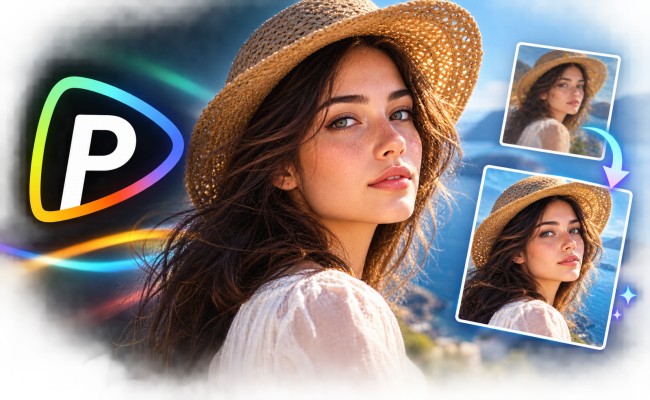
AI image generation has evolved rapidly, but a persistent gap has separated generated artwork from the visual fidelity that professional creators demand.
Earlier models produced impressive compositions at a glance, yet closer inspection revealed telltale signs of artificial origin – flat lighting, waxy skin textures, distorted anatomical details, and inconsistent material surfaces.
For illustrators, concept artists, and visual designers whose reputations depend on precision, these shortcomings made AI generation a novelty rather than a professional tool.
The latest generation of models is closing that gap decisively, shifting AI image creation from experimental curiosity to production-ready creative infrastructure.
Where Previous AI Image Tools Fall Short
The limitations of earlier AI image generators follow predictable patterns that working artists recognize immediately. Lighting tends toward uniform diffusion, lacking the directional specificity and shadow complexity that give images dimensional depth.
Surface textures – particularly skin, fur, fabric, and reflective materials – render with a synthetic smoothness that reads as artificial regardless of how strong the overall composition might be.
Character consistency presents another persistent challenge. Generating a human figure or animal companion that maintains recognizable features across multiple images has been notoriously unreliable.
A portrait might capture a subject’s likeness in one generation and produce an entirely different face in the next, making AI tools impractical for projects requiring recurring characters, personal commissions, or brand mascot development.
The iteration workflow compounds these frustrations. When a generated image is ninety percent correct but requires adjustment to a single element – a background color, a lighting angle, a compositional detail – most tools force complete regeneration.
The successful elements are lost alongside the problematic ones, turning refinement into a lottery rather than a controlled creative process.
How GPT Image 2.5 Addresses Core Quality Gaps

Pollo AI’s GPT Image 2.5 AI Image Generator represents a meaningful departure from these established limitations.
The model produces imagery where ambient light behaves with physical accuracy – casting directional shadows, creating natural falloff gradients, and interacting with surface materials in ways that respect their physical properties.
Skin renders with visible pore texture and subsurface light scattering. Fur displays individual strand variation and realistic volume. Metallic surfaces reflect environmental light with appropriate distortion and intensity.
The speed improvement is equally significant for professional workflows. Generation times have been cut substantially compared to previous iterations, meaning artists spend less time waiting and more time evaluating and refining.
For creators producing multiple concept variations or exploring different visual directions for a single project, this acceleration compounds meaningfully across a working day.
Character and subject fidelity addresses what has been perhaps the most commercially limiting shortcoming of earlier tools. Pollo AI’s GPT Image 2.5 AI Image Generator maintains distinctive facial structures, body proportions, and pet characteristics across multiple generations with notably improved consistency.
An illustrator developing a children’s book character can generate that character in different scenes and poses with confidence that the subject will remain recognizably the same individual.
A pet portrait artist can produce multiple compositions of the same animal without losing the specific markings and features that make the portrait personal.
The Power of Region-Specific Iterative Editing
The annotation-based regional editing capability fundamentally changes how creators interact with AI-generated imagery. Rather than treating each generation as an all-or-nothing outcome, artists can identify specific zones within a composition for targeted revision.
A landscape illustration where the foreground foliage works perfectly but the sky lacks drama can have just the sky region reworked while preserving every leaf and shadow in the foreground.
A character portrait where the expression and pose are ideal but the background setting needs adjustment can be refined precisely without risking the successful elements.
This granular control transforms AI generation from a slot machine into a collaborative tool that respects the creator’s editorial judgment.
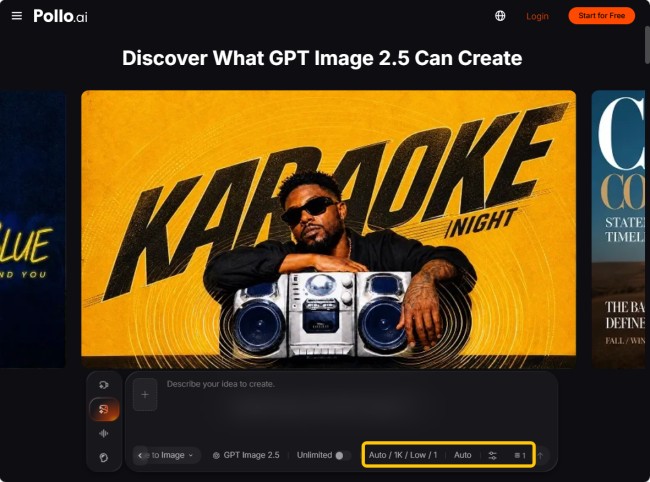
Pollo AI’s GPT Image 2.5 AI Image Generator implements this through an intuitive annotation workflow where creators mark specific image regions and provide targeted revision instructions. The surrounding composition remains locked, ensuring that refinement is additive rather than destructive.
For professional illustrators accustomed to layer-based editing in traditional digital art software, this approach feels naturally familiar—applying the same conceptual framework within an AI-accelerated production environment.
Style Versatility and Resolution Flexibility
Creative projects rarely exist within a single aesthetic framework. A concept artist might need photorealistic environmental renders for one client and stylized character illustrations for another.
A social media creator might alternate between pixel art aesthetics and painterly compositions depending on content themes.
Pollo AI’s GPT Image 2.5 AI Image Generator accommodates this diversity through built-in style modes spanning photorealism, animated aesthetics, dimensional rendering, and stylized interpretations.
Switching between styles doesn’t require learning different tools or adjusting complex technical parameters – the same conversational interface produces output across the full stylistic spectrum.
Resolution flexibility from 1K through 4K with adjustable quality tiers ensures that output serves its intended purpose without unnecessary file overhead. Social media posts can be generated at efficient mid-resolution.
Portfolio pieces and print materials can be produced at maximum fidelity. This practical flexibility eliminates the need for separate upscaling workflows that introduce their own quality compromises.
Extending Static Artwork Into Dynamic Content
For visual creators building audiences on platforms that increasingly prioritize video content, strong static artwork represents untapped potential. A compelling illustration that performs well as an Instagram post could generate significantly more engagement as a short animated sequence on Reels or TikTok.

Pollo AI’s AI photo to video ad generator bridges this format gap naturally. Creators can transform their strongest AI-generated illustrations into dynamic short clips where elements gain subtle motion – atmospheric effects animate, lighting shifts gradually, and compositional elements develop cinematic depth.
The tool offers both rapid generation for quick social content and more refined processing for portfolio-quality motion pieces, with automatic soundtrack integration that matches the visual mood.
This static-to-motion pipeline is particularly valuable for creators who sell digital products, offer commissioned work, or promote creative services.
A portfolio piece that exists as both a polished static image and an atmospheric motion clip serves double duty across platforms and presentation contexts, maximizing the commercial value of each creative investment.
For illustrators exploring merchandise or print-on-demand revenue streams, Pollo AI’s AI photo to video ad generator enables the creation of promotional video content directly from product mockup imagery – transforming a static t-shirt design preview into a dynamic promotional clip suitable for social advertising without requiring separate video production resources.
What This Means for Professional Creative Practice
The cumulative effect of these improvements—realistic rendering, consistent character preservation, regional editing precision, style versatility, and format extensibility—shifts AI image generation from a supplementary experiment into a core production tool for professional visual creators.
This doesn’t diminish the value of human creative judgment. Concept development, emotional storytelling, cultural sensitivity, and aesthetic vision remain fundamentally human capabilities.
What changes is the production overhead required to execute that vision. Creators who previously spent eighty percent of their working hours on rendering and technical execution can redirect that time toward conceptual exploration, client relationships, and creative growth.
Pollo AI’s GPT Image 2.5 AI Image Generator occupies a specific and valuable position in this evolving landscape: a tool that respects professional quality standards while dramatically reducing the mechanical effort required to meet them.
For creators ready to integrate AI generation into disciplined creative workflows, the quality threshold has reached the point where the output genuinely serves professional applications.
Conclusion
The gap between AI-generated imagery and professional creative standards has narrowed to the point where the distinction is no longer automatically apparent.
Pollo AI’s GPT Image 2.5 AI Image Generator delivers the rendering fidelity, character consistency, editing precision, and production speed that professional visual creators require – capabilities that transform AI generation from an interesting experiment into a reliable component of serious creative practice.
For illustrators, designers, and visual artists evaluating whether AI tools have matured enough to earn a place in their professional workflow, the answer has shifted decisively.
Also Read: