
Screens once framed interaction. Flat, distant, safe. That boundary has started to crack. Virtual Reality – VR – steps in and replaces observation with presence. Not a gimmick anymore. A working tool. Businesses now use VR for business to train staff, sell products, simulate risk, and compress time.
Adoption did not explode overnight. It crept in through gaming, then enterprise pilots, then full deployment. Quiet shift. Hard impact.
This shift changes how companies operate, not just how they present.
1. VR in Corporate Training: Learning Without Real-World Risk
Traditional training struggles with realism. Slides, videos, occasional workshops. Retention fades fast. VR alters that equation.
Employees enter simulated environments where actions carry consequences – without real damage. A factory worker handles hazardous equipment virtually before touching the real machine. A healthcare trainee practices procedures in controlled simulations. Mistakes occur. Lessons stick.
The difference lies in immersion. Attention does not wander when the environment surrounds the learner. Engagement rises naturally.
Training modules in VR often include:
- Scenario-based simulations
- Real-time feedback loops
- Performance tracking dashboards
- Repeatable environments for skill refinement
Costs initially raise eyebrows. Hardware, development, integration. Yet long-term savings appear – fewer accidents, reduced onboarding time, consistent training standards across locations.
There is a shift here. Training moves from passive intake to active participation. That alone reshapes workforce readiness.
2. Virtual Collaboration: Meetings Without Physical Limits
Video calls solved distance but never replaced presence. Faces on a grid. Limited cues. Fatigue builds.
VR introduces spatial meetings. Participants appear as avatars inside shared environments. Whiteboards float. Models sit in the center. Conversations feel anchored, not fragmented.
This changes collaboration dynamics:
- Teams interact with 3D objects instead of static files
- Brainstorming becomes spatial, not linear
- Remote teams feel less disconnected
Complex industries benefit heavily. Architects review building models together. Engineers examine components in real scale. Design flaws surface earlier.
There is friction, of course. Hardware adoption, user comfort, learning curve. Yet once teams adapt, meetings shift from passive discussions to interactive sessions.
Distance stops mattering. Presence returns in a different form.
3. Product Visualization and Sales: Showing, Not Explaining
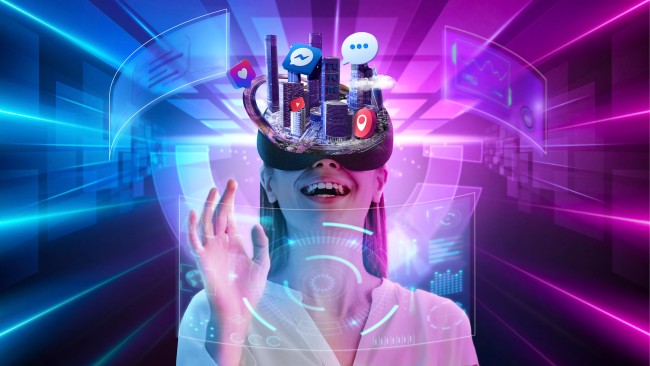
Explaining a product works. Showing it works better. Letting customers experience it? That closes deals faster.
VR allows businesses to present products in immersive formats. A customer walks through a virtual showroom, inspects items, interacts with features. No physical inventory required.
Retail, real estate, automotive – each sector uses VR differently:
- Real estate firms offer virtual property tours
- Automotive brands showcase car interiors and features
- Retailers build digital storefronts without geographic limits
Decision-making improves when customers see context. Size, scale, usability – these become clear instantly.
This approach reduces return rates. Expectations align with reality. Fewer surprises post-purchase.
Sales cycles shorten. Engagement deepens. That combination drives revenue.
4. VR in Prototyping and Product Development
Building physical prototypes takes time. Costs stack quickly. Iteration slows.
VR removes part of that friction.
Design teams create virtual prototypes and test them before production begins. Changes happen instantly. No material waste. No manufacturing delays.
Engineers evaluate:
- Structural design
- Ergonomics
- User interaction
Feedback loops tighten. Teams iterate faster. Products reach market sooner.
There is also a subtle benefit. Collaboration improves across departments. Designers, engineers, and stakeholders interact with the same virtual model. Miscommunication drops.
A rough sketch evolves into a near-final product without touching a factory floor. That changes timelines dramatically.
5. Customer Experience: Engagement That Sticks
Customer attention has become scarce. Traditional marketing struggles to hold it. VR offers a different path – experience over advertisement.
Brands create immersive campaigns where customers participate instead of observe. A travel company simulates destinations. A fashion brand builds virtual runways. A tech firm showcases products in interactive demos.
Engagement metrics shift:
- Longer interaction times
- Higher recall rates
- Stronger emotional connection
Customers remember experiences more than static ads. That memory drives brand loyalty.
There is a catch. Poor execution backfires. Low-quality VR feels clunky, even frustrating. Investment in design and performance becomes non-negotiable.
Done right, VR turns marketing into storytelling that people step inside.
6. Remote Work and Virtual Offices

Remote work is no longer temporary. Yet isolation remains a challenge. Emails and chats lack presence. Video calls only go so far.
VR introduces virtual offices – shared digital spaces where teams work side by side, despite physical distance.
Employees:
- Attend meetings in virtual rooms
- Collaborate on shared projects
- Maintain informal interactions
This setup attempts to recreate office dynamics without physical constraints.
Adoption varies. Some teams embrace it. Others resist due to hardware fatigue or motion discomfort. Still, as technology improves, these barriers may fade.
The idea holds weight. Workspaces no longer tied to geography. Teams form across borders without losing cohesion.
7. Data Visualization and Decision-Making

Complex data often overwhelms. Charts and dashboards flatten insights. VR reintroduces depth.
Data appears in three dimensions. Patterns become visible from different angles. Relationships between variables stand out.
Executives interact with data rather than scanning reports. They walk through datasets, manipulate variables, observe outcomes in real time.
This changes decision-making speed. Insights arrive faster when data becomes tangible.
Industries dealing with large datasets – finance, logistics, healthcare – find this approach particularly effective.
Clarity improves. Decisions sharpen.
Challenges Slowing Adoption
VR carries promise, but not without friction.
Hardware remains a barrier. Headsets cost money. Maintenance adds overhead. Not every employee adapts comfortably.
Content development also demands investment. Poorly designed VR environments fail quickly. Businesses must commit to quality.
Integration with existing systems presents another hurdle. Data pipelines, security protocols, compatibility – each requires attention.
Then comes user fatigue. Extended VR sessions can cause discomfort. Companies must design workflows carefully to avoid burnout.
These challenges do not block adoption. They slow it. Companies willing to invest strategically move ahead.
The Future of VR for Business
VR will not replace every tool. It will replace the right ones.
As hardware improves – lighter devices, better resolution, reduced latency – adoption barriers will shrink. Software ecosystems will mature. Integration will become smoother.
Future use cases may include:
- Advanced remote diagnostics in healthcare
- Fully immersive training academies
- Real-time global collaboration hubs
- Hyper-personalized customer experiences
The direction is clear. Businesses that experiment early gain an edge. Those that wait risk falling behind.
Final Thoughts
VR for business is no longer experimental. It delivers measurable impact across training, collaboration, sales, and product development.
The shift is subtle yet powerful. Interaction moves from observation to immersion. That shift changes how employees learn, how teams collaborate, and how customers engage.
Adoption requires investment, patience, and careful execution. No quick wins here. Yet the payoff grows over time.
Flat screens started the digital era. Immersive environments may define the next phase.
Also Read: