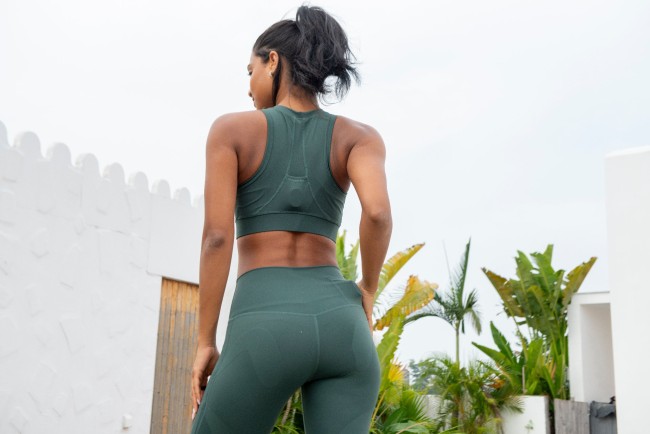
For the last decade, “wearable” has meant, by default, something on the wrist. Watches and bands absorbed most of the category’s attention, to the point where it’s easy to forget that this was a choice of form factor and not a law of physics.
Two migrations have appeared in the last few years, and they’re driven by entirely different things: one moves sensing to the finger, the other moves function into clothing. They look like separate stories. They point at the same conclusion: the wrist is turning out not to be the best location for every job.
Why the wrist became the default answer
It’s worth establishing how the wrist won, because otherwise it’s hard to see why it’s now giving ground.
The wrist has three natural advantages. First, it’s convenient: you raise your arm and look, and interaction costs almost nothing. Second, there’s room: a battery, a display and an antenna fit there, and a ring can’t accommodate any of them. Third, social acceptance is already established, because people were wearing watches long before they were wearing computers.
Those three made the wrist the best landing point for one device containing every function. While the primary job of a wearable was showing information, that answer was beyond argument.
The problem is that the job changed.
Two ceilings the wrist runs into
The first is continuity. A wrist device has to come off once a day to charge, and that removal breaks the data. Sleep data only means something if it’s continuous.
Resting heart rate needs a full night to establish a baseline. Once the device is off the body, that interval is empty. A device that isn’t on you measures nothing, a fact so simple that it’s easy to skip past.
The second is that the wrist can only observe. Wrist devices are good at telling you what happened to your body. They don’t act on it. That isn’t manufacturers being lazy; the wrist is simply a poor place to deliver anything. It’s too far from the large muscle groups and covers too little area.
And so the migration started, heading in a clear direction: measurement goes where the signal is best; output goes where the coverage is largest.
Migration one: sensing moves to the finger
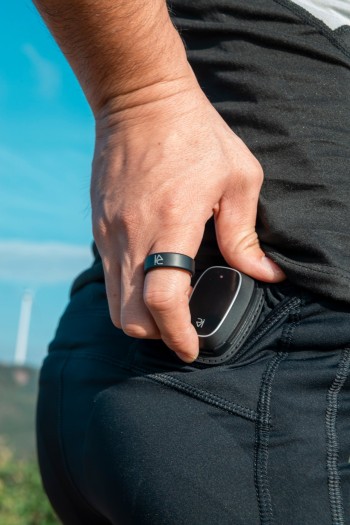
The first path relocates the sensor to a finger, in the form of a smart ring.
The driver here isn’t that rings are fashionable. It’s signal quality. Optical heart rate sensing works on changes in how blood absorbs light, and perfusion and vascular density are both better at the finger than at the wrist, so the pulse waveform a sensor reads there is cleaner. That’s a physiological fact, not an engineering trick.
The second driver is wear continuity. At around four grams, a ring is close to weightless and doesn’t interfere with wrist movement, which means it can stay on through sleep, and through sports that need the wrist. For lifting, racket sports or throwing, having a watch on the wrist is a genuine hindrance.
The third driver is battery. Small and low-power translates into multi-day or week-long runtime, where mainstream wrist devices are largely a one-day charge (current Apple Watch models are rated at around 24 hours). Battery life directly determines whether data is continuous, which was the first ceiling above.
The finger form factor has a clear cost too: there’s no display. A ring can’t be an interaction hub. It can only be a collection point. And that limitation is the other face of its advantages: precisely because it doesn’t display or interact, it can be small, light and long-lived on a charge.
Migration two: function moves into clothing
The second path puts components into garments, in the form of smart apparel.
The driver here is coverage area. The wrist covers a tiny amount of muscle. Clothing covers the large muscle groups of the torso and limbs. Anything that needs to act on a large area of the body, whether electrical stimulation, heating or posture sensing, can’t be done at the wrist and has room to work in fabric.
But apparel has an unavoidable problem: washing.
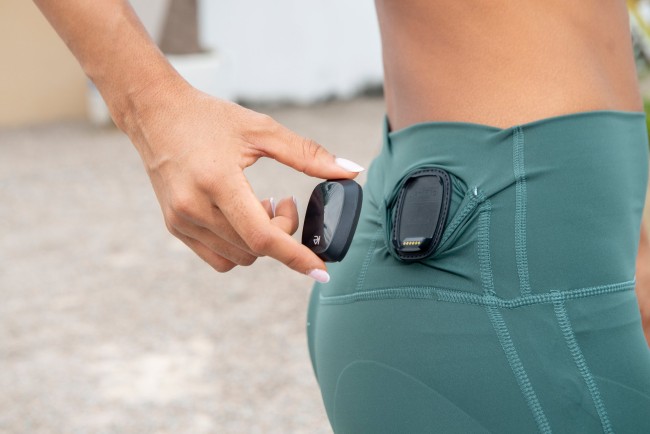
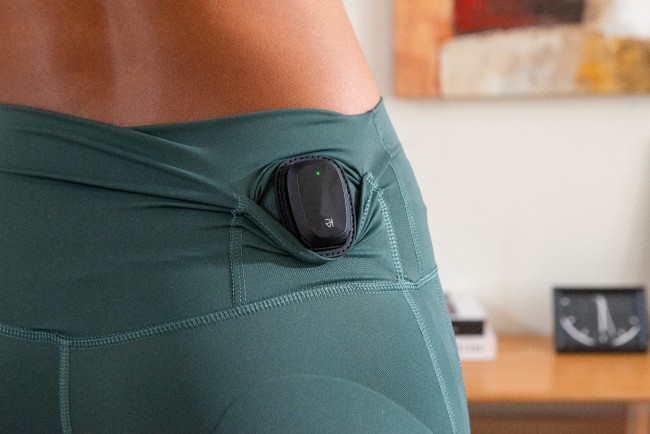
Clothing with electronics in it has to be washable or the product doesn’t exist. The industry’s standard answer is modularity: the control unit comes off and the garment goes in the machine.
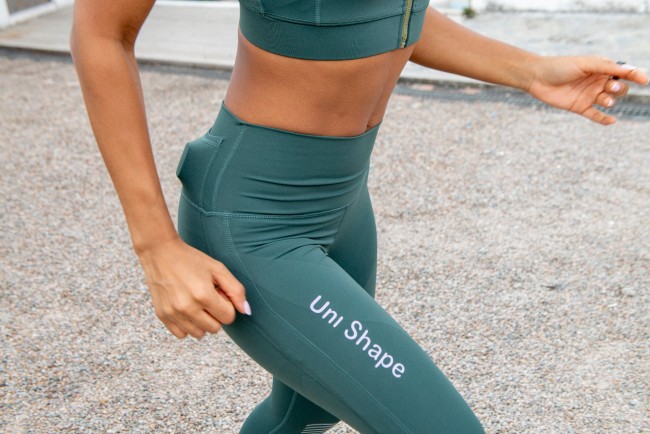
UniShape’s EMS training apparel is a representative example, and its care instructions are specific: a laundry bag, low-temperature water, nothing above 50 °C, and no tumble drying. Those are hard limits rather than suggestions, because heat damages conductive fabric and electrodes.
There’s a broader observation worth making here: how precisely a manufacturer writes its washing instructions is a decent proxy for whether it has done durability testing at all. Vague instructions usually mean the problem hasn’t been solved, only left unmentioned.
Once the halves separate, things get simpler
Put the two migration paths together and a conclusion emerges that’s more interesting than “form factors are changing”:
Sensing and output are separating, and each is going to the place that suits it.
Where one wrist device previously had to measure, display, interact and connect, compromising on every one, the pieces now split. Sensing has gone to the finger, where the signal is best. Output has gone into clothing, where the coverage is largest. Display and interaction stay on the phone, because the screen was already there.
The separation delivers three practical benefits.
First, each half can iterate independently. A new sensor generation doesn’t require touching the garment. A new garment cut doesn’t require touching the circuit.
Second, the failure domain shrinks. A flat sensor battery doesn’t stop the output side working. On days you’re not wearing the garment, the sensor keeps logging anyway. Neither drags the other down.
Third, “where did this data come from” becomes clear. That’s good for the user trying to understand the product, and good for the manufacturer trying to describe it accurately.
A case where both lines converge
UniShape’s smart EMS training system sits on both paths at once, which makes it a useful reference.
The sensing side is a 4.2-gram ring running ECG and PPG together, measuring heart rate, ECG, blood oxygen, blood pressure trends, sleep and temperature, rated at roughly seven days per charge and supplied with a 110-gram charging case. That’s the first path in its typical form: the ring is the only sensing device, and neither the generator nor the garment measures anything.
The output side is a 30-gram electrical stimulation signal generator with a 560 mAh cell, rated at roughly three hours of continuous use, driving two channels of electrodes in the garment. The garment comes in three formats: running tights, cycling shorts, and a women’s sports bra. That’s the second path.
Both halves connect to the phone app directly over Bluetooth LE, a star topology rather than a chain, so a flat ring doesn’t stop the generator, and the generator being off doesn’t stop the ring logging.
The value of the connection lives in the software. The ring reads heart rate continuously through a session, and the app works out which phase the session has reached. Then it proposes a matching stimulation mode, which waits for user confirmation before taking effect.
The reason it doesn’t shift silently is that optical heart rate is significantly noisier while you move than when you’re still. Handing the decision back to the user is the more responsible choice here.
Session modes also step through three phases automatically (warm-up, working, cool-down), each with a different pattern, although the progression runs on a fixed timer and doesn’t read heart rate.
One clarification is worth making explicitly, because it’s so often assumed: the ring does not control stimulation intensity. It’s a pure sensing device, not a remote control. Intensity remains an independent control on the app side.
And one boundary needs stating alongside it, for the same reason. The ring’s blood pressure is trend data, not a single clinical reading, and it doesn’t replace a cuff.
Its ECG is a single-lead reading. It records a tracing but does not diagnose, and can’t identify atrial fibrillation or any rhythm irregularity, which is work for validated medical devices and doctors.
The system as a whole is a fitness and training product, not a medical device; it doesn’t treat anything and doesn’t diagnose anything, and no FDA clearance or approval has been obtained.
(On availability: the system is currently in crowdfunding, with delivery listed at up to two months.)
What this means for the category
The two migrations together point at a reasonably clear judgement:
The era of one device doing everything is ending in wearables, and what replaces it is modular combinations split by responsibility. Sensing goes where it’s most accurate, output goes where it’s most effective, and compute and interaction stay on the phone.
That change is good for consumers: you no longer have to replace an entire watch to get one new sensor. It’s good for manufacturers too: each half can iterate at its own pace.
And what decides whether a combination like this works is no longer the spec of any single piece of hardware, but how honest the software joining them is: whether it presents estimates as measurements, and whether it decides on the user’s behalf when the signal is unreliable.
The hardware is coming apart; the responsibility is moving up. That may be the part of this migration most worth watching.
Also Read: