Volkswagen is not just one car brand.
That is probably the easiest way to understand the company. The Volkswagen badge is familiar almost everywhere, but behind it sits a much larger group that controls a collection of very different automotive names.
A Volkswagen Golf, a Porsche 911, a Lamborghini Revuelto and a Bentley Continental GT hardly look like products from the same family. Legally and commercially, though, they are connected.
So, how many car brands does Volkswagen own?
The short answer is 10 brands in the Volkswagen Group’s official portfolio. They are Volkswagen, Volkswagen Commercial Vehicles, Škoda, SEAT, CUPRA, Audi, Lamborghini, Bentley, Porsche and Ducati. Volkswagen itself currently lists these ten brands as part of the Group.
There is a little more to the story, especially with Scout and the Group’s truck businesses.
The 10 Brands Owned by Volkswagen Group
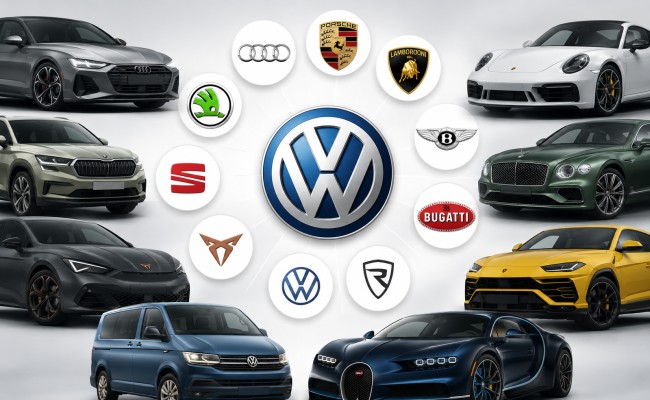
Volkswagen organises its principal brands into different groups rather than running them all as one giant automotive business.
The current list is:
- Volkswagen
- Volkswagen Commercial Vehicles
- Škoda
- SEAT
- CUPRA
- Audi
- Lamborghini
- Bentley
- Porsche
- Ducati
Volkswagen places these brands into three main passenger and mobility groups: Core, Progressive and Sport Luxury.
That structure matters because these brands do not target the same buyers.
Volkswagen and Škoda operate in high-volume segments. Audi sits in the premium market. Bentley and Lamborghini chase a much smaller luxury and performance audience. Porsche occupies the sport and luxury end of the business. Ducati, meanwhile, makes motorcycles rather than cars.
So calling all ten “car brands” is technically a bit loose.
Which Volkswagen Brands Make Regular Cars?
Five names sit in the Group’s Core brand group: Volkswagen, Škoda, SEAT, CUPRA and Volkswagen Commercial Vehicles.
Volkswagen is the obvious one. Its range covers everything from compact cars to electric vehicles and SUVs.
Škoda takes a different approach. Its cars tend to focus heavily on practicality, space and value. The brand has become a significant part of Volkswagen’s European business without simply copying Volkswagen’s products.
SEAT is another mainstream brand, while CUPRA has developed into a separate performance-focused marque. CUPRA started from SEAT but has built its own identity and product range.
Volkswagen Commercial Vehicles is slightly different. Its focus is vans and commercial transport rather than conventional family cars. That is why including it in a simple “car brands” count can cause confusion.
Still, Volkswagen itself includes the brand among its ten core Group brands.
Audi, Lamborghini and Bentley Are Also Volkswagen Brands
This is where the Volkswagen portfolio gets interesting.
Audi is the Group’s major premium-car brand. Its vehicles compete with established luxury manufacturers and cover sedans, SUVs, electric cars and performance models.
Then there is Lamborghini.
Volkswagen acquired Lamborghini in 1998 through Audi. The Italian supercar manufacturer has remained under Audi’s control ever since, giving Volkswagen a presence at the extreme performance end of the market.
Bentley occupies a different niche. Its cars are aimed at customers looking for very high levels of luxury, performance and craftsmanship.
Audi, Bentley, Lamborghini and Ducati are grouped together under Volkswagen’s Progressive brand group. Volkswagen’s 2025 results continued to report these four brands together, with Audi accounting for the vast majority of vehicle deliveries in that group.
That combination tells quite a story. Volkswagen is not trying to make every brand look alike. The point is to cover very different parts of the market.
Where Does Porsche Fit In?
Porsche is also part of Volkswagen Group.
It sits separately in the Sport Luxury group, rather than alongside Audi, Bentley and Lamborghini. Volkswagen’s current brand structure lists Porsche as the only brand in this group.
Porsche’s position within Volkswagen is unusual because Porsche AG is publicly traded. Its shares have been listed on the stock market since 2022, but Volkswagen Group remains the controlling shareholder.
For anyone researching Volkswagen ownership, this distinction is worth knowing. “Volkswagen owns Porsche” is a reasonable shorthand, but the corporate structure is more complicated than simply saying Porsche is a wholly owned subsidiary.
Ducati Is Owned by Volkswagen Too
Ducati often gets left out of Volkswagen brand lists because it does not manufacture cars.
It makes motorcycles.
The Italian motorcycle company is nevertheless one of Volkswagen Group’s ten official brands. It sits in the Progressive group alongside Audi, Bentley and Lamborghini.
This is why the answer to “how many car brands does Volkswagen own?” depends partly on what counts as a car brand.
If the question means all official Volkswagen Group brands, the answer is 10.
If it means brands that primarily sell passenger cars, Ducati should obviously be removed from that count. Volkswagen Commercial Vehicles also deserves separate treatment because its business centres on commercial vehicles.
What About Scout?
Scout is the name that makes current Volkswagen ownership lists slightly messy.
Volkswagen is developing Scout as a separate American vehicle brand, with plans for electric SUVs and pickup trucks aimed at the US market. Volkswagen’s current materials list Scout under “Other Brands and Business Units” rather than among the ten core brands.
That distinction is easy to miss.
Scout is associated with Volkswagen Group, but it is not included in the official ten-brand count shown on Volkswagen’s main Group page. Volkswagen’s 2026 materials, however, do show Scout among its wider portfolio of brands and businesses.
So an article claiming Volkswagen has exactly ten automotive names across every part of its business would be oversimplifying the situation.
Does Volkswagen Own Truck Brands Too?
Yes, but this is another area where the wording matters.
Volkswagen Group’s wider portfolio includes TRATON, whose brands include Scania, MAN, International and Volkswagen Truck & Bus. Volkswagen’s 2026 Group presentation lists these under its separate Trucks brand group.
These are commercial vehicle businesses, not passenger-car brands.
That means they should not normally be added to the answer when someone asks how many car brands Volkswagen owns.
The Bottom Line
The clean answer is straightforward:
Volkswagen Group officially has 10 core brands: Volkswagen, Volkswagen Commercial Vehicles, Škoda, SEAT, CUPRA, Audi, Lamborghini, Bentley, Porsche and Ducati.
But that number needs context.
Ducati makes motorcycles. Volkswagen Commercial Vehicles focuses on commercial vehicles. Scout is being developed as another brand within the wider Group portfolio, while TRATON brings major truck manufacturers into the wider Volkswagen corporate family.
That is why different websites sometimes give different answers to the question.
For a standard answer, 10 official Volkswagen Group brands is the figure to use in 2026. For a broader look at Volkswagen’s automotive empire, the number becomes less tidy because the Group also has truck businesses, Scout and other specialised operations.
And that, really, is the point. Volkswagen Group is not one car company wearing ten different badges. It is a collection of brands designed to operate at very different price points, markets and customer segments while sharing ownership, technology, resources and corporate infrastructure.
Also Read: