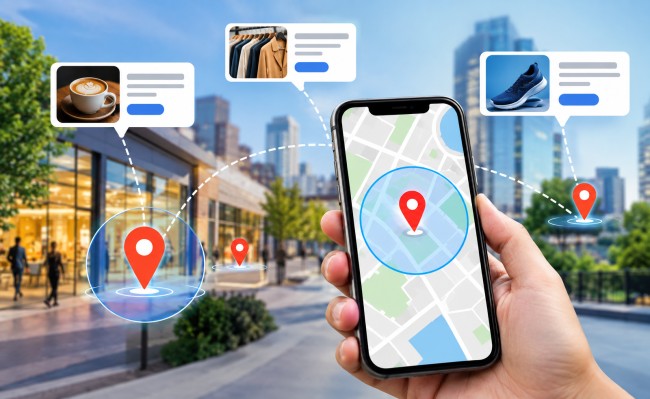
Geofencing sounds simple on paper. Draw a virtual boundary around a place, identify people who enter it, and use that location signal for advertising.
In practice, there is quite a bit more to it.
A useful geofencing campaign may target shoppers visiting a competitor, people attending a trade show, customers around a shopping centre, or households close to a local business.
The quality of the location data matters, as does what happens after the audience has been created. Some providers are built for programmatic media buying. Others put more emphasis on foot-traffic measurement, audience data or managed campaigns.
The following companies are among the better-known options for businesses researching geofencing advertising companies and location-based advertising services.
1. Simpli.fi
Simpli.fi is a strong starting point for advertisers that want detailed control over location-based campaigns. Its geofencing system can create boundaries around individual properties, retail stores, competitor locations and event venues. The platform also supports targeting based on how recently someone visited a location.
That last part is useful. A person who visited a competing dealership yesterday is a different advertising prospect from someone who visited six months ago.
Simpli.fi also offers address-based geofencing, event targeting and offline measurement. Its Geo-Fence Finder provides access to more than 14 million storefront locations, according to the company.
2. GroundTruth
GroundTruth has built much of its advertising business around location data and real-world behaviour. Its Blueprints technology is designed to map physical places more precisely than a simple radius around an address, including store interiors, parking areas and wider retail locations.
That distinction can make a difference. A circular fence around a shopping centre may include roads and neighbouring properties. A carefully mapped boundary can produce a cleaner audience.
GroundTruth also puts considerable emphasis on visitation measurement, making it a sensible option for brands that care about what happens in physical stores after an ad is served.
3. Foursquare
Foursquare is widely associated with location intelligence, and that background carries into its advertising products. Its technology can be used to build audiences around physical places and understand visitation behaviour.
For marketers, the attraction is not simply drawing a boundary on a map. Location data can help identify patterns around where consumers shop, eat, travel or spend time.
Foursquare is therefore worth looking at when location intelligence and measurement are bigger priorities than simply running a basic proximity campaign.
4. Blis
Blis takes a location-led approach to digital advertising, with an emphasis on privacy-conscious audience targeting.
Its services are aimed at brands that want to use physical-world signals in media planning and activation without building campaigns around traditional cookie-based targeting. That makes Blis particularly relevant for advertisers dealing with changing privacy expectations and fragmented digital identifiers.
It is also more than a basic geofence provider. Location data can be used for audience planning, activation and campaign measurement across different media environments.
5. Brandify
Brandify focuses on businesses that want geofencing handled as part of a broader marketing campaign rather than as a standalone technical tool.
Its services cover location targeting, competitor targeting, event audiences, retargeting and visitor intelligence. That combination is particularly interesting for local businesses and multi-location companies where the goal is usually straightforward: bring more qualified people through the door.
Brandify can make sense for companies that do not have a dedicated programmatic advertising team in-house.
6. Propellant Media
Propellant Media offers geofencing as part of a wider digital advertising service. Campaigns can be built around locations such as competitor businesses, events, offices and other physical areas.
The company also works with address-based targeting and connected TV advertising, giving marketers options beyond standard mobile display campaigns.
This type of setup is useful for businesses that want someone to manage the campaign rather than hand a complicated advertising dashboard to an internal team and hope for the best.
7. WebFX
WebFX is better known as a full-service digital marketing agency, but geofencing is part of its advertising offering.
That broader service mix can be useful. A local company may need geofencing alongside Google Ads, SEO, social advertising, landing pages and conversion tracking. Keeping those activities under one marketing partner can reduce some of the operational headaches.
WebFX is therefore less about being a specialist geofencing platform and more about fitting location targeting into a wider digital marketing strategy.
8. Reveal Mobile
Reveal Mobile is another name worth researching for location intelligence and audience targeting. Its technology has been particularly relevant to marketers working with physical locations, events and audience movement.
Event marketing is an interesting use case here. A company exhibiting at a conference can build an audience around the venue and continue marketing to relevant attendees after the event rather than allowing the opportunity to disappear when the doors close.
That makes location data useful before, during and after a physical event.
9. InMarket
InMarket combines location data with consumer behaviour and advertising activation. The approach is particularly relevant to retailers and consumer brands where shopping behaviour is closely connected to physical locations.
A geofencing campaign does not have to stop at “someone entered this store.” Location signals can become part of a larger picture involving shopping patterns, audience segments and advertising responses.
For brands with a strong retail focus, that broader view can be more useful than running isolated proximity ads.
10. Geofencing.com
Geofencing.com focuses specifically on location-based marketing rather than trying to be everything to every advertiser.
Its offering centres on creating virtual boundaries around physical locations and using those audiences for digital advertising and retargeting. This can be useful for businesses that want a straightforward geofencing campaign without building an entire location-marketing operation themselves.
The service is worth considering alongside larger platforms when comparing managed geofencing providers.
Conclusion
There is no single geofencing advertising company that fits every campaign.
The best provider depends on the actual objective. A restaurant trying to attract customers from a competing chain has a different requirement from a national retailer measuring store visits across hundreds of locations.
Starting with that objective – and then comparing targeting precision, reporting, media reach and pricing – is a much better approach than choosing a provider simply because it appears first in a “top 10” list.
Also Read: